Local Guides · Market Updates · Neighborhood Spotlights

The Real Deal Blog

Categories
All
Community
Buying
Selling
Local Guides
Market Updates
Neighborhood Spotlights
The Be Wealthy Workshop with Brett Tanner in Cincinnati, October 8, 2026
Community
September 28, 2026
The Be Wealthy Workshop Comes to Cincinnati: Build Real Wealth Through Real Estate on October 8

Agent Education Event   /   Cincinnati

Real estate agents spend their careers helping clients build wealth through property. Far fewer have a clear plan for building their own. On Thursday, October 8, 2026, The Be Wealthy Workshop comes to Cincinnati, led by Brett Tanner, who built his own path to financial freedom and will show attendees how to do the same.

If you have ever finished a strong year of closings and wondered why it did not feel like you were getting ahead, this day is built for you.

Oct. 8Thursday, 2026
10 AM to 3:30 PMWorkshop hours
$149Registration
MadTree3301 Madison Rd, Cincinnati

Reserve Your Seat on Eventbrite

Meet Brett Tanner

According to the event organizer, Brett has built multiple seven- and eight-figure businesses and owns more than 100 investment properties. His workshop has helped agents across the country design long-term wealth plans, and his approach treats money not as the finish line but as fuel for freedom.

What you will learn

The workshop is a full day focused on turning a real estate career into lasting personal wealth. According to the event program, attendees will:

  • Build a step-by-step personal wealth plan, framed around a $50 million target and tailored to your life and business.
  • Leverage real estate, the asset agents have more access to than almost anyone, as a wealth-building tool rather than just a paycheck.
  • Expand their investment playbook with advanced strategies, including note buying, quick flips, and cash-flowing investments.
  • Raise capital with confidence by building an investor profile, underwriting deals, and attracting funding.
  • Scale their wealth and their business together, so each one creates opportunities for the other.
  • Protect what they build using risk and liability scorecards.
  • Establish monthly wealth habits and metrics that drive steady, consistent growth.
  • Walk through 15 proven ways to legally reduce their tax bill.
  • Network with agents and investors focused on building real wealth, with access to the KW Wealth community and Brett's network of investing, tax, and asset protection advisors.

Attendees leave with templates, scorecards, and a written wealth plan they can put to work right away.

Why this matters for agents

Agents see opportunities before almost anyone else: the listing that needs work, the seller who needs a quick close, the neighborhood that is about to move. Yet many agents never turn that inside view into investments of their own. Commission income can be strong and still leave you starting from zero every January.

A day like this is about changing that pattern. The goal is to leave with a written plan, a few strategies you can act on, and relationships with people who are already doing the work.

Who should attend

  • Agents who want their business to build long-term wealth, not only income
  • Newer agents who want good financial habits from the start
  • Experienced agents and team leaders ready to invest more intentionally
  • Investors looking to connect with agents in the Cincinnati market

Event details

Space is limited, so plan to register early.

Reserve your seat

Registration is handled through Eventbrite. Seats are limited.

Register on Eventbrite

Questions? Call or text Neal Mitchell at 513-301-9696.

Never Miss an Event

Subscribe for future events

Can't make October 8, or want to hear about the next workshop and agent event? Subscribe and be the first to know.

Follow Be Wealthy on Eventbrite

Or join Neal's agent events list

For Agents Considering Their Next Move

Build wealth, not just income

Wealth-building education like the Be Wealthy Workshop and the KW Wealth community is part of what Keller Williams puts in front of agents. At Keller Williams Pinnacle Group in Mason, we believe agents should leave every year further ahead than they started, with a business that builds long-term wealth and a team that helps them grow.

If you are licensed with another brokerage and this kind of growth is what you are looking for, let's talk. As Team Leader at Keller Williams Pinnacle Group, Neal Mitchell leads the office's growth and recruiting, and he is always open to a confidential, no-pressure career conversation.

Start a Confidential Conversation

The Be Wealthy Workshop is organized by Be Wealthy. Workshop content, pricing, and registration terms are provided by the event organizer and should be confirmed on Eventbrite. This post is for general information only and is not financial, tax, investment, or legal advice. Results vary, and past performance does not guarantee future outcomes.

Read Article →
internal-only, agent education, wealth building, real estate investing, recruiting
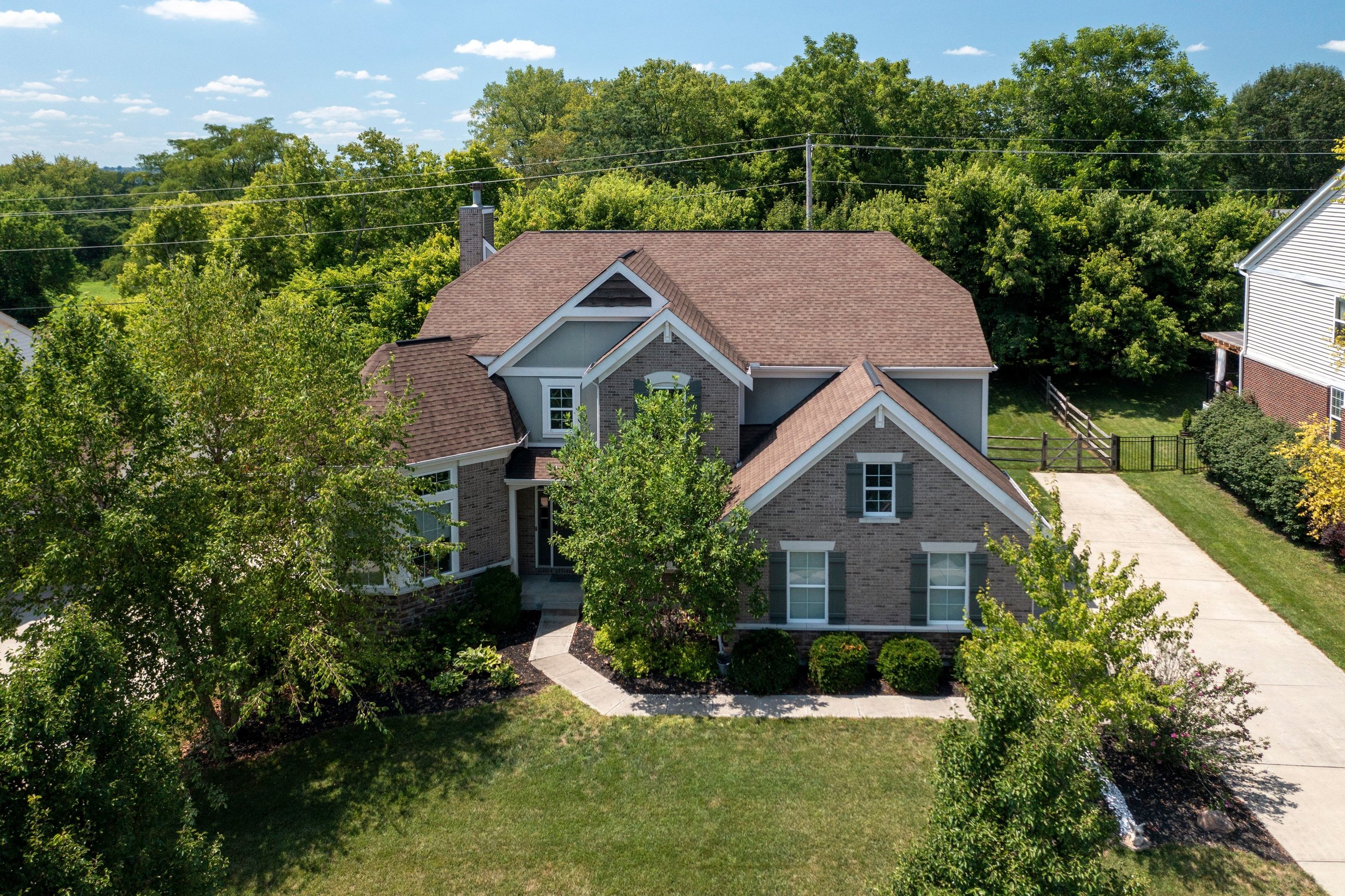
Front exterior of 1529 Shaker Run Boulevard in Lebanon, Ohio
Neighborhood Spotlights
September 19, 2026
1529 Shaker Run Boulevard: A Lebanon Home Worth Exploring

Featured Home   /   Lebanon, Ohio

A two-story entry. A kitchen that brings everyone together. A patio that invites you to stay a little longer. At 1529 Shaker Run Boulevard, Lebanon, OH 45036, the appeal is in the way the spaces work together, inside the home and throughout the surrounding community.

Built in 2014, this four-bedroom home offers a distinctive setting in Shaker Run, with golf, neighborhood recreation, and historic downtown Lebanon to explore. Here is a closer look at the home and what is nearby.

4Bedrooms
3.5Bathrooms
4,296Listed square feet
3Garage spaces

View the Listing & Photo Gallery

See the listing for pricing and availability. The bathroom count includes three full bathrooms and one half bathroom.

A memorable first impression

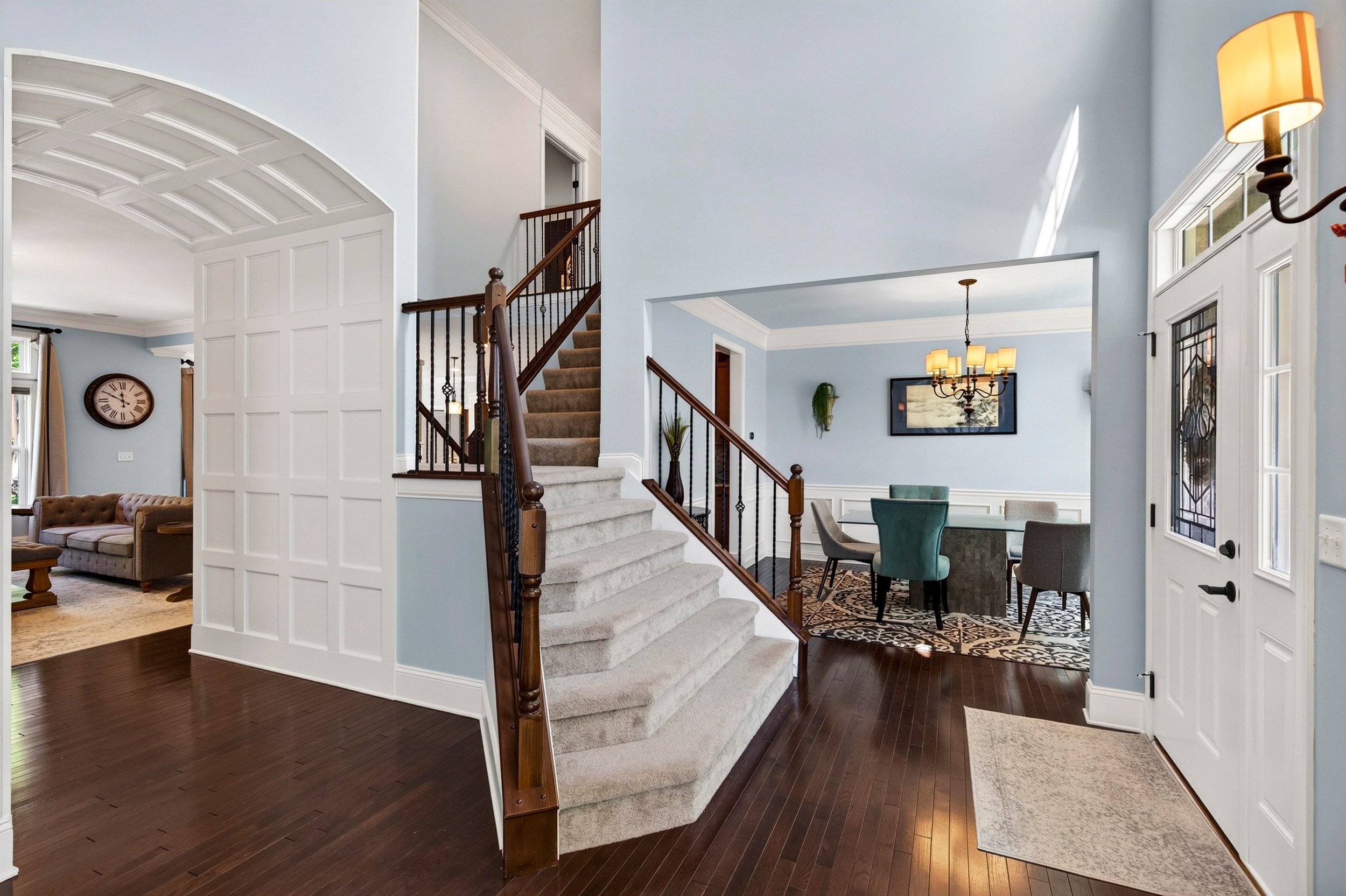
The entry sets the tone with a tall ceiling, a sweeping staircase, and sightlines into the surrounding rooms. White trim and warm flooring tones give the space definition, while the layout offers a natural transition from arrival to everyday living.

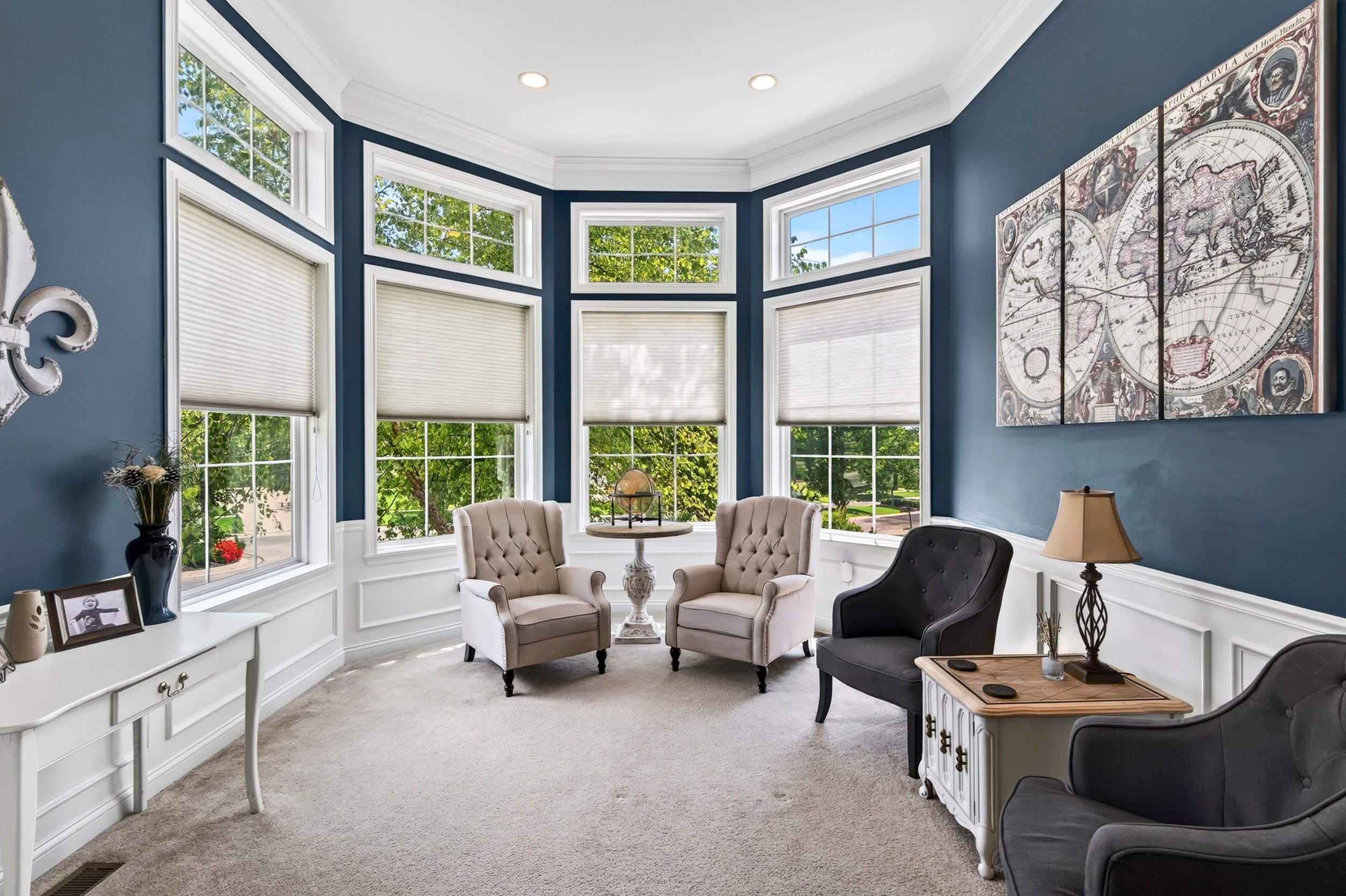
One of the most distinctive spaces sits just off the foyer: a window-lined sitting room with an angled wall of windows, deep blue walls, and decorative trim. Picture a reading room, a conversation space, or a quiet place to begin the day.

Two-story foyer and curved staircase at 1529 Shaker Run Boulevard
A light-filled entry with a sweeping staircase and views into the adjoining rooms.
Window-lined sitting room with blue walls and white trim
A distinctive sitting room framed by tall windows.

A kitchen at the center of the day

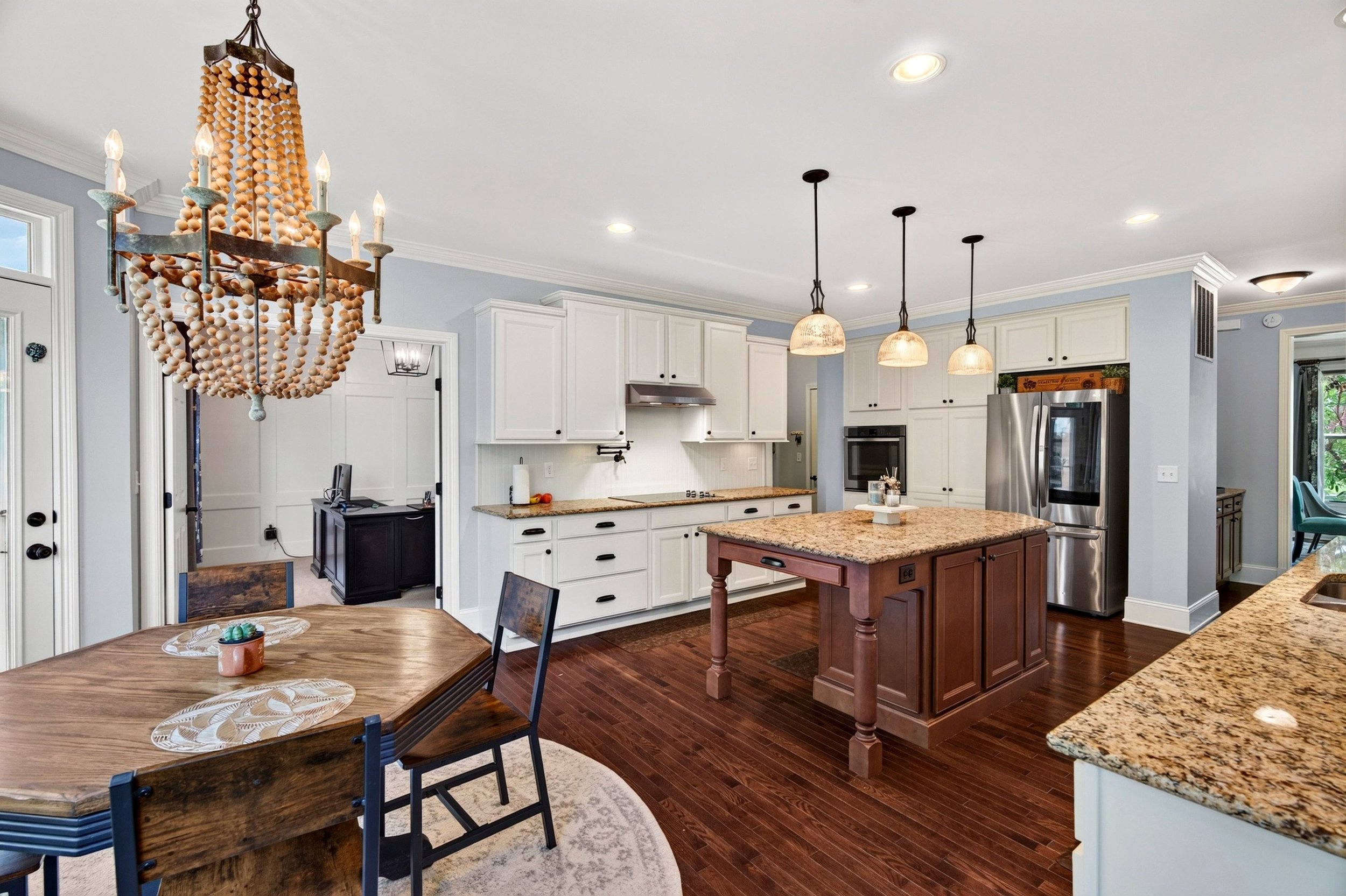
The kitchen pairs white cabinetry with a contrasting island, pendant lighting, and stainless appliances. A breakfast area sits alongside a broad window, and an adjacent counter and cabinet area adds a practical spot for serving or a coffee station.

Kitchen with contrasting island, white cabinets, and adjoining breakfast area
An island kitchen and adjoining breakfast area create a comfortable everyday gathering space.

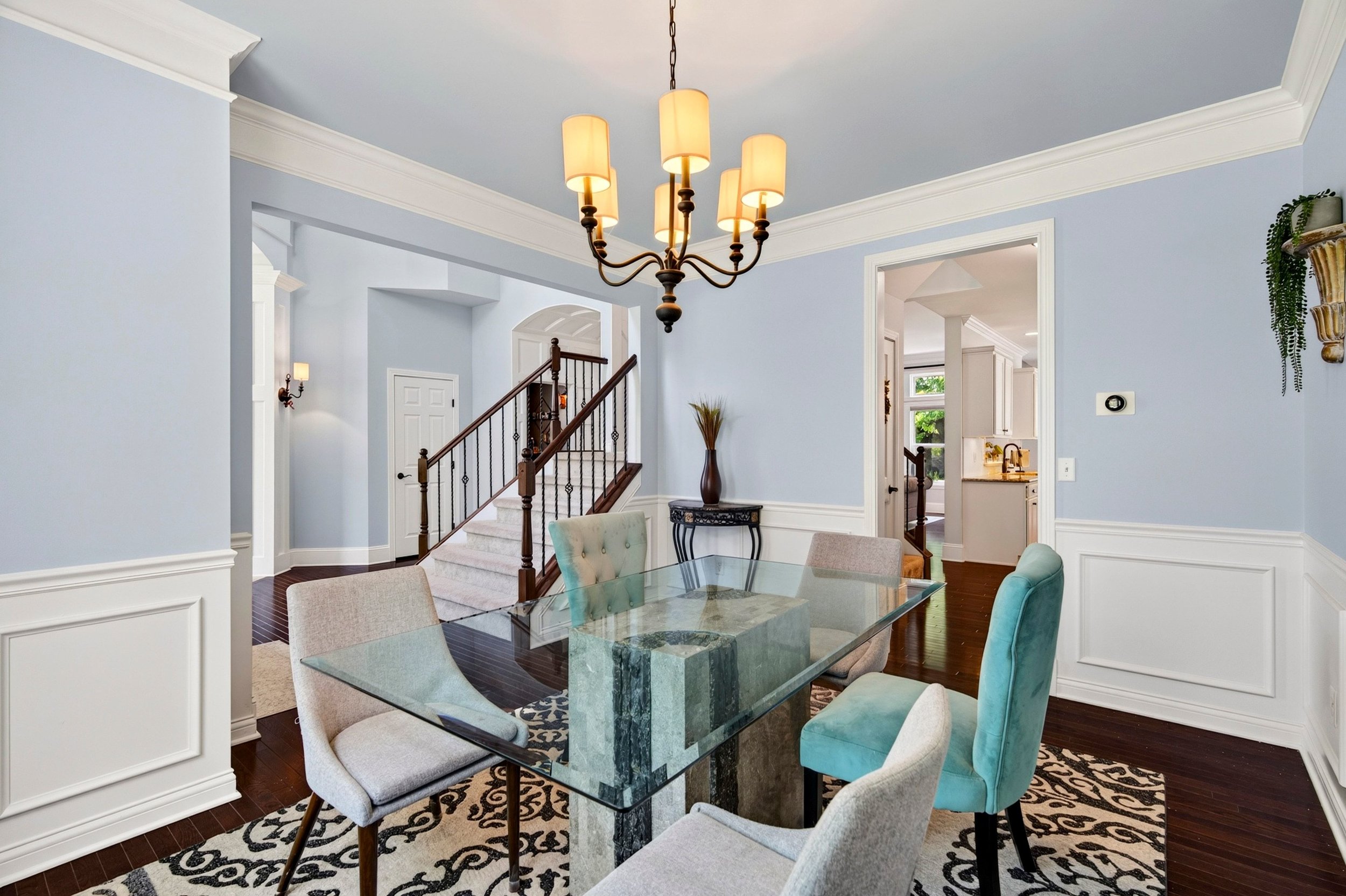
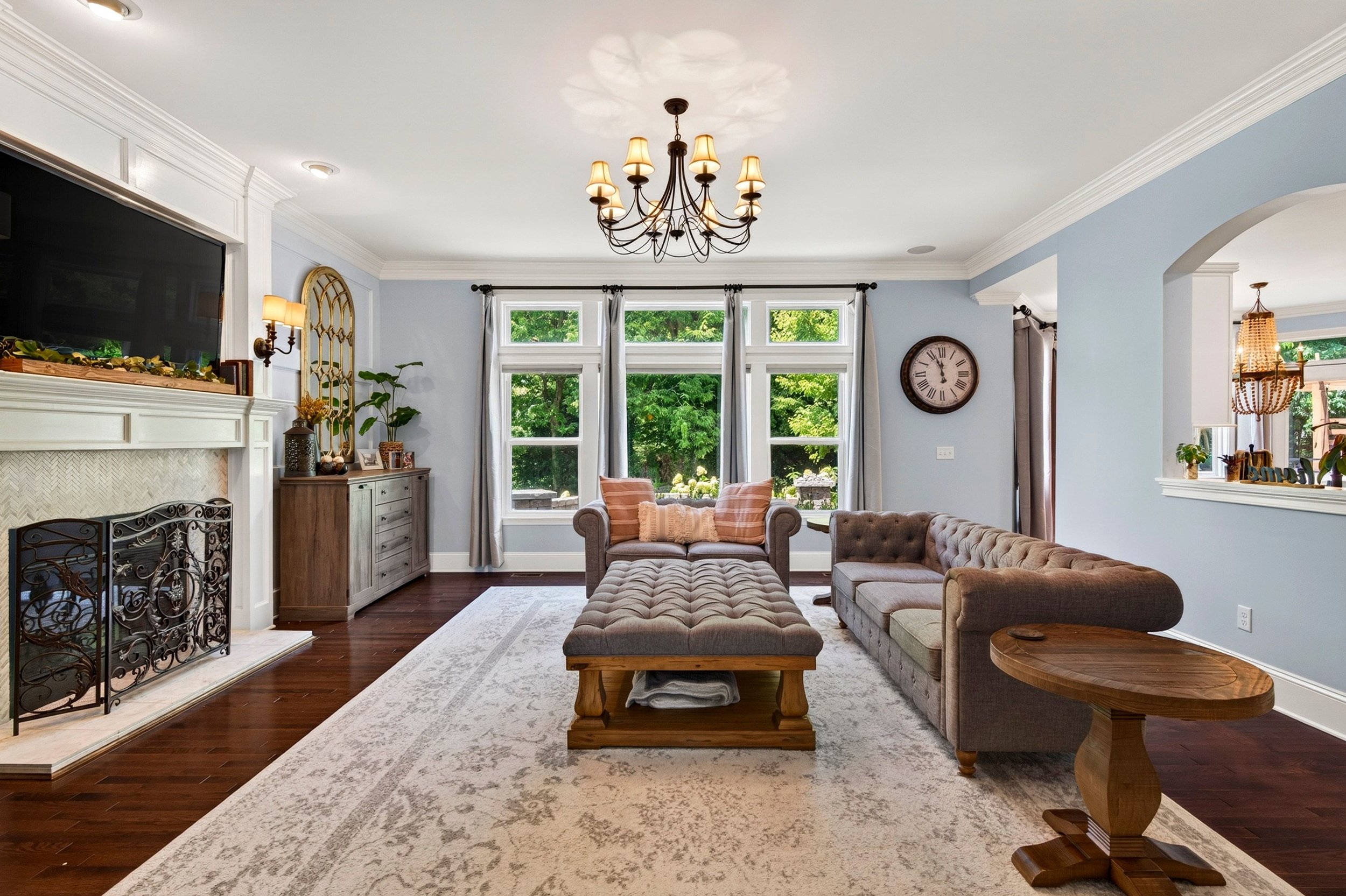
For a more formal setting, the separate dining room brings its own character through detailed trim and a chandelier. The main living room offers a fireplace, tall windows, and a connection to the kitchen, giving you room to gather without every activity sharing the same space.

Formal dining room with chandelier and decorative trim
A separate dining room for meals, celebrations, and conversation.
Living room with fireplace and tall windows
A fireplace and generous windows anchor the main living room.

Space to spread out, indoors and out

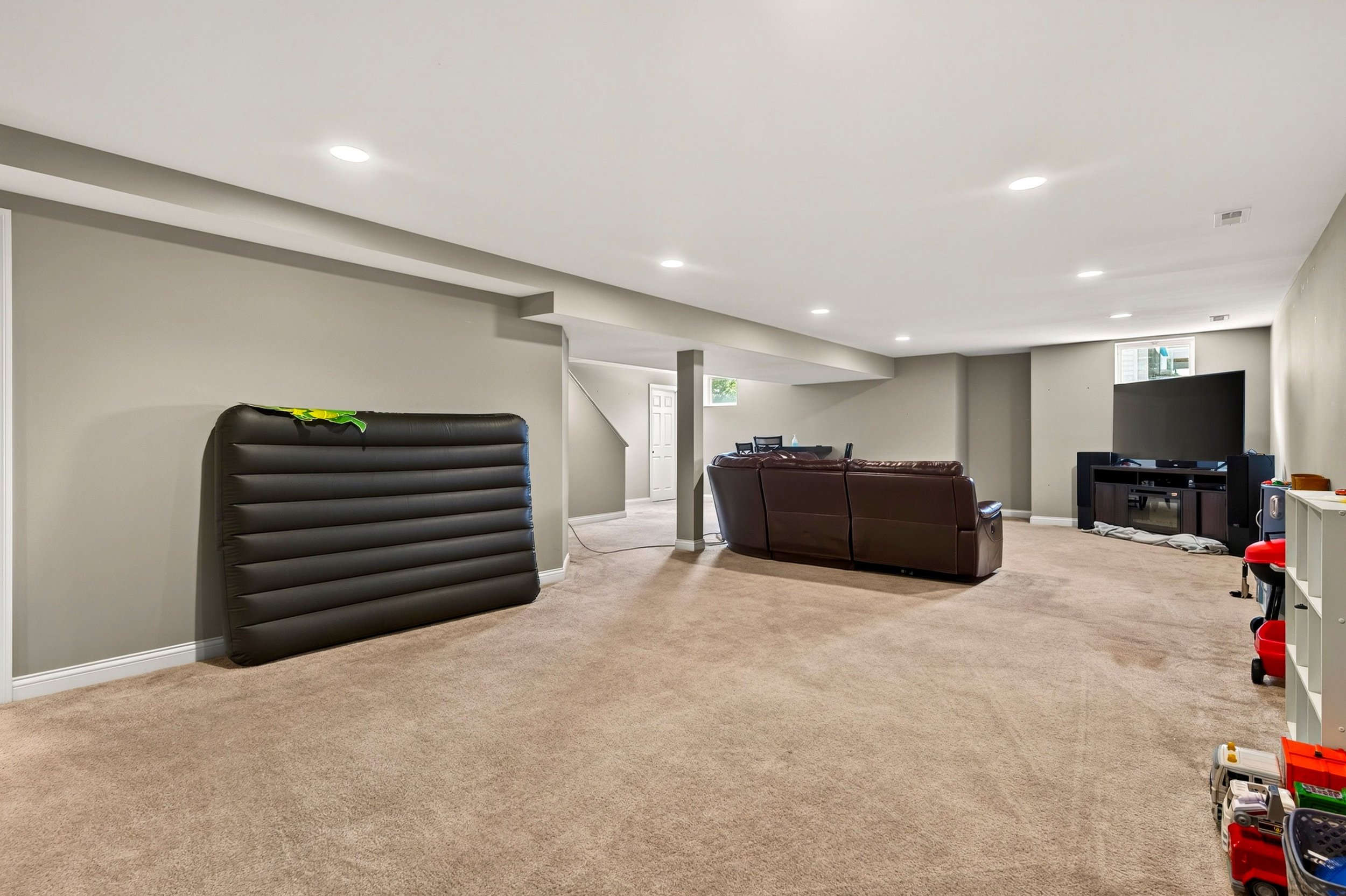
The finished lower level creates options for a movie room, recreation area, workout space, or hobbies. During a tour, take time to think about how you would use it alongside the home's four bedrooms and main-floor living spaces.

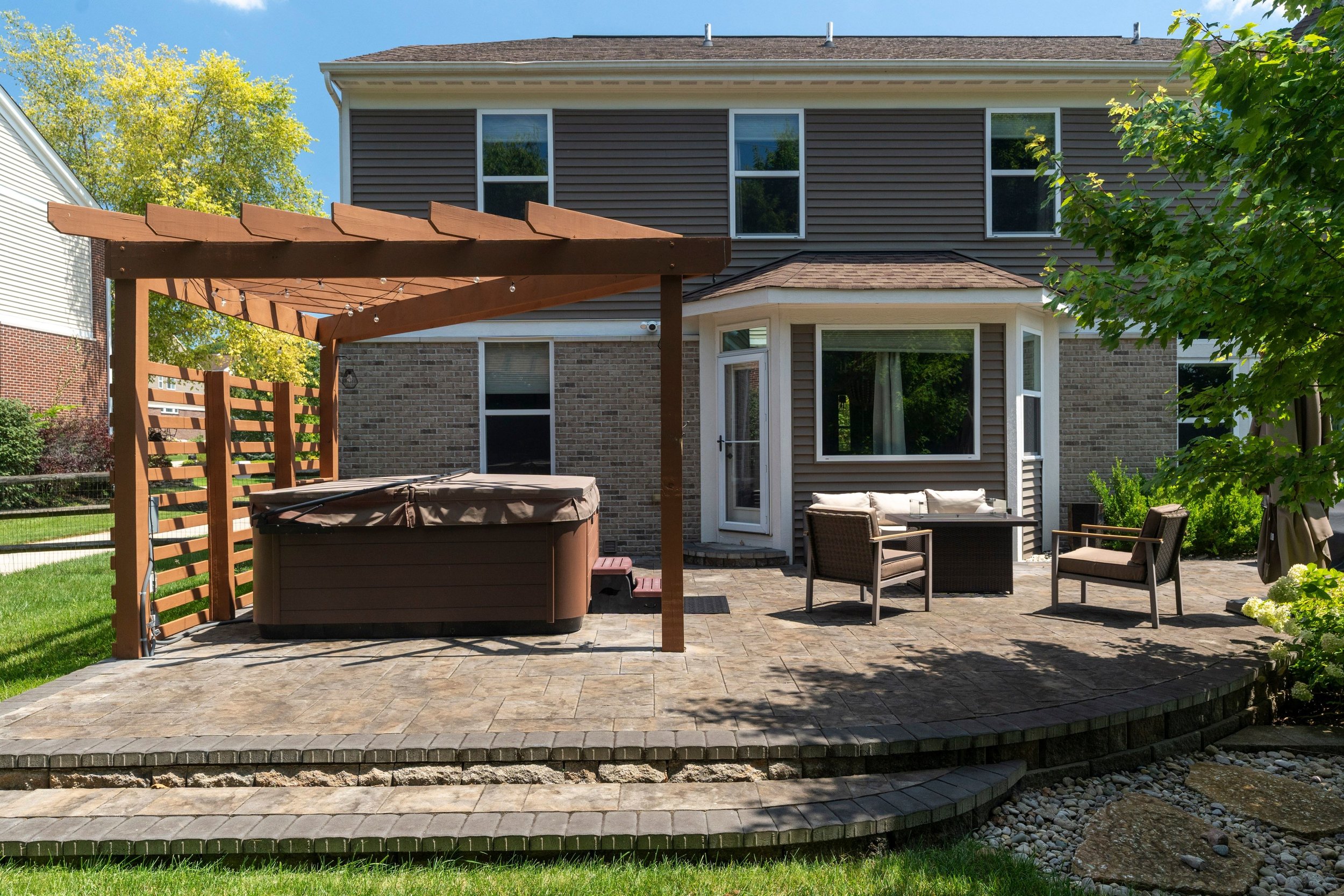
Outside, the curved paver patio and pergola give the backyard a defined place to relax and entertain. Landscaping and mature trees add texture around the outdoor living area. It is a part of the home worth seeing from more than one angle.

Finished lower level with open recreation space
A finished lower level with flexibility for recreation and everyday use.
Rear paver patio and pergola at 1529 Shaker Run Boulevard
The backyard's paver patio and pergola extend the living space outdoors.

Photos show the property as photographed. Confirm included fixtures, equipment, and personal property with the listing team.

Take the video tour

Walk through the home on screen, then choose the spaces you want to spend more time exploring in person.

Open the property tour in a new tab

Golf is part of the Shaker Run story

Shaker Run Golf Club offers 27 holes across three nines: Woodlands, Lakeside, and Meadows. Arthur Hills designed the original Woodlands and Lakeside courses, which opened in 1979. The Meadows nine followed in 1999, designed by Michael Hurdzan and Dana Fry.

Explore the Community

27 holes. Three distinct nines.

Get a closer look at the layouts before planning a round, or explore dining at Mulligans at Shaker Run.

Explore the official course tour   |   Golf, dining & club information

You do not have to build every weekend around golf to appreciate the setting. Fischer Homes' Shaker Run community guide also describes swimming pools, a fitness center, a playground, a pavilion, lakes, and walking trail access to Warren County Armco Park.

Confirm the amenities and HOA access that apply to this property. Golf reservations, memberships, and fees are separate questions to review with the club; a home purchase should not be assumed to include golf privileges.

Get to know Lebanon beyond the neighborhood

Lebanon adds a different pace to the picture, with a historic downtown, antique shopping, and the Golden Lamb among its recognizable landmarks. Our Lebanon neighborhood guide brings together local information, schools, and nearby places, including The Breakfast Club and Broadway Barrel House.

Use it to plan a visit around the home tour. Explore downtown, try a local restaurant, and drive the routes you expect to use most often. That can tell you more about the fit than a map alone.

Explore the Lebanon Neighborhood Guide

School information in one place

The Lebanon guide includes Bowman Primary School, Donovan Elementary School, Berry Intermediate School, Lebanon Junior High School, and Lebanon High School, with grade information and links to the district.

For current enrollment information and to confirm the schools assigned to this specific address, visit Lebanon City Schools or contact the district directly.

Open houses & how to RSVP

Want to see 1529 Shaker Run Boulevard in person? Check our open house page for the current schedule before making plans.

  1. Look for 1529 Shaker Run on the Upcoming Open Houses page.
  2. Confirm that the displayed date and time are upcoming, then select RSVP for This Open House.
  3. Complete the RSVP form with your contact information and select Confirm RSVP.

If no upcoming date is listed, contact us to ask about the next opportunity or arrange a private showing.

Check Open Houses & RSVP

Call 513-301-9696 to ask about a tour

Come see how the home lives

Photos are a starting point. Walking the entry, standing in the kitchen, and stepping onto the patio will help you decide how the home fits your plans.

Contact Neal Mitchell and the Real Deal Home Team at Keller Williams Pinnacle Group to ask questions, confirm availability, or arrange your visit to 1529 Shaker Run Boulevard.

Request a Tour

Property information is subject to change. Square footage is reported listing information and should be verified. Community amenities, school assignments, and showing arrangements should be confirmed with the appropriate provider.

Read Article →
1529 Shaker Run Boulevard, Lebanon Ohio, Shaker Run, listing spotlight, open house
Buying
September 15, 2026
What to Expect at Your Home Inspection

For a lot of buyers, the home inspection is the most nerve-wracking part of the entire process. You've found a house you love, you're under contract, and now a stranger with a flashlight and a clipboard is about to spend a few hours finding everything that could possibly be wrong with it. Here's the thing: that's exactly what a good inspection should do, and understanding what's coming makes the whole experience a lot less stressful.

What a Home Inspection Actually Covers

A standard home inspection typically takes two to four hours, depending on the size and age of the home, and covers the major systems and structural elements that would be expensive or dangerous to have problems with. That includes the roof, foundation, structural framing, electrical system, plumbing, HVAC, water heater, and visible insulation and ventilation.

Inspectors will test outlets and switches, run the furnace and air conditioning to confirm they're functioning, check for signs of water intrusion or past water damage, look at the attic and crawlspace if accessible, and examine windows, doors, and major appliances that are included in the sale. What they won't do is open up walls, move furniture, or perform any kind of invasive testing, an inspection is a visual and functional assessment, not a forensic investigation.

Why You Should Attend in Person

We always encourage buyers to attend their inspection whenever possible, rather than just reading the report afterward. A written report can only convey so much. Standing next to the inspector while they point out how a water heater's age affects its remaining useful life, or why a certain type of electrical panel is worth knowing about, gives you context that's hard to get from photos and bullet points alone.

It's also simply the best opportunity you'll get to ask direct questions about how things work in your future home before you own it: where the water shutoff is, how the HVAC zones are set up, or what regular maintenance a specific system needs. Inspectors do this for a living and are usually happy to walk you through it if you're there.

What Counts as a Big Deal vs. a Minor Issue

Every home, even a newly built one, will have some items on an inspection report. That's normal and shouldn't automatically be alarming. The key is learning to separate genuinely significant issues from the kind of minor wear and tear that exists in every home.

Major structural or safety items, things like foundation cracks that suggest ongoing movement, active roof leaks, outdated or unsafe electrical wiring, major HVAC or plumbing failures, or signs of significant water damage, are worth taking seriously and often worth negotiating over. Minor issues, like a loose cabinet hinge, a cracked outlet cover, or a slow bathroom drain, are typically just normal maintenance items that come with owning any home and usually aren't worth derailing a deal over.

Part of our job is helping you read a report with that lens, so you're not panicking over a GFCI outlet that needs resetting while potentially overlooking something that genuinely matters.

What Happens After the Report Comes In

Once the inspection report is complete, we'll go through it together and talk through what actually matters for your specific situation. From there, buyers generally have a few paths depending on what the contract allows and what the findings show: request that the seller complete specific repairs before closing, ask for a credit at closing so you can handle repairs yourself after you move in, renegotiate the purchase price to reflect the cost of needed work, or in some cases, walk away from the deal entirely if the inspection contingency allows it and the issues are serious enough.

There's no single right answer here, it depends on the issue, the market, and what matters most to you. Some buyers would rather have cash in hand to fix things their own way; others want peace of mind that repairs are done correctly before they move in. We'll help you think through which approach makes the most sense given what the inspection actually found.

Specialty Inspections Worth Considering

A standard home inspection doesn't cover everything. Depending on the home's age, location, and your own concerns, it may be worth adding specialty inspections like radon testing, termite or pest inspections, sewer scope inspections for older homes, or mold testing if there are visible concerns. These typically cost extra and aren't always necessary, but they can be well worth it for certain properties, older homes with a history of pest issues, or homes in areas with known radon concerns, for example.

We can help you figure out which, if any, of these make sense for the specific home you're buying, rather than paying for every add-on just to be thorough.

What This Means If You're Selling

If you're on the selling side, understanding what buyers' inspectors look for can help you prepare before your home ever hits the market. Simple things like replacing burnt-out bulbs, clearing access to the electrical panel and water heater, fixing minor leaks, and making sure smoke detectors are functional can prevent small items from showing up on a report and giving buyers a negotiating foothold. For bigger-ticket items like an aging roof or HVAC system, it's often worth getting ahead of the conversation with a pre-listing inspection so there are no surprises once you're under contract.

We'll Walk Through It Together

A home inspection isn't something to dread, it's one of the most valuable tools you have to make sure you know exactly what you're buying before it's truly yours. Whether you're a first-time buyer trying to understand what's normal, or a seller wanting to get ahead of potential issues, we're with you through the entire process, report and all.

If you have questions about an upcoming inspection or want help preparing your home before you list, reach out to Real Deal Home Team. We're happy to walk you through what to expect.

Read Article →
home inspection, buying process, closing
Neighborhood Spotlights
September 10, 2026
Our Favorite Neighborhoods Around Cincinnati

Ask ten people in Cincinnati what their favorite neighborhood is, and you'll get ten different answers — and honestly, that's the best thing about this city. Whether you want walkable charm, top-rated schools, small-town character, or a front-row seat to the skyline, there's a corner of Greater Cincinnati that fits. After years of helping buyers and sellers move through this market, we keep coming back to five areas in particular: Hyde Park, Mason, Liberty Township, and the Riverfront/Downtown corridor. Here's why we love them, and why they might be right for you too.

Hyde Park: Classic Charm, Unmatched Walkability

If you want a neighborhood that feels like it was built for people, not just cars, Hyde Park is hard to beat. The heart of it all is Hyde Park Square, a tree-lined gathering spot ringed by boutique shops, coffee shops, and some of the city's best restaurants, all within a short walk of home for most residents. It's the kind of place where you can grab dinner, walk the dog, and run into three neighbors before you make it back to your front porch.

The housing stock is part of the appeal, too. Hyde Park is full of early-1900s Tudors, colonials, and brick two-stories with real character — deep porches, mature trees, and lots that feel established rather than cookie-cutter. With a population of roughly 14,000 and a median household income well above the regional average, it's one of the more affluent pockets of the city, but it doesn't feel exclusive so much as lived-in and cared for.

Families are drawn to the proximity to Cincinnati Public and top-tier private schools, young professionals like the short commute downtown, and empty nesters love that they can walk to nearly everything they need. If you're looking for a neighborhood where equity has historically held strong and the lifestyle sells itself, Hyde Park is always near the top of our list to show buyers.

Mason: Space, Schools, and Room to Grow

Head about 25 minutes north and the character shifts completely. Mason is where a lot of our clients land when they want more square footage, a yard the kids can actually use, and a school district that consistently ranks among the best in the state. Mason City Schools is the draw for a huge share of the families we work with, and it shows in how quickly well-priced homes here tend to move.

Mason has grown a lot over the last two decades, and it shows in the variety of housing available — everything from established 1990s subdivisions with mature landscaping to newer construction with the finishes today's buyers expect. It's also home to Kings Island, which means a built-in summer economy of restaurants, entertainment, and seasonal energy that a lot of nearby suburbs simply don't have.

With a population approaching 35,000, Mason is really more of a small city than a sleepy suburb at this point, and the amenities reflect that. You've got a real downtown-adjacent feel in some pockets, big-box convenience everywhere else, and easy access to I-71 for anyone commuting into Cincinnati or up toward Dayton. For buyers who want the space and schools of the suburbs without feeling like they're in the middle of nowhere, Mason consistently delivers.

Liberty Township: The Fast Movers

If Mason represents an established, matured suburb, Liberty Township is what a fast-growing one looks like in real time. This is one of the quickest-growing communities in the region, and it's easy to see why once you spend an afternoon there. Liberty Center anchors a genuinely walkable mixed-use development with shopping, dining, a hotel, and green space that feels more like a small downtown than a typical strip-mall suburb.

Liberty Township is part of the Lakota school district, another regional standout, and that pairing of strong schools with newer housing stock is exactly what pulls so many young families out this way. With a population approaching 44,000 and climbing, new subdivisions continue to fill in, offering buyers more current floor plans, larger primary suites, and the kind of open-concept layouts that are hard to find in older, closer-in neighborhoods.

Convenience is a real selling point here too. Liberty Township sits right along I-75, which makes it a genuinely practical commuter location for anyone working in Cincinnati, Dayton, or even northern Kentucky. For buyers who want new construction energy, top schools, and a community that's still very much being built out (with the opportunity that comes along with that), this is one of the first places we point people.

Riverfront & Downtown: The City's Front Porch

Then there's the river. Cincinnati's Riverfront district, anchored by Smale Riverfront Park and The Banks, is less a traditional residential neighborhood and more the beating heart of the city — and increasingly, it's becoming a real place to live, not just visit. Smale Park's lawns, gardens, and swings draw families and dog walkers year-round, while The Banks brings restaurants, live music, and game-day energy right along the water.

What's changed in recent years is the amount of actual housing going in along this corridor. New condo and apartment developments have brought a wave of buyers who want walkability, skyline views, and immediate access to Reds and Bengals games, festivals, and the riverfront itself, all without needing a car for daily errands. It's a completely different lifestyle than Hyde Park, Mason, or Liberty Township, and that's exactly the point — it appeals to a different kind of buyer entirely.

Downtown proper rounds this out with historic buildings converted into loft-style condos, a growing restaurant and nightlife scene, and a genuine sense that Cincinnati's urban core has real momentum behind it. For buyers who want to be in the middle of everything, with the Ohio River as their backyard, this stretch of the city offers something none of our other favorite neighborhoods can: a true front-row seat to Cincinnati itself.

Finding the Right Fit for You

The truth is, there's no single "best" neighborhood in Cincinnati — there's only the best neighborhood for your life right now. Maybe that's the walkable charm of Hyde Park, the space and schools of Mason, the fast-growing energy of Liberty Township, or the skyline views along the Riverfront. Part of our job is helping you figure out which one actually fits how you live, not just what looks good on a listing photo.

If any of these neighborhoods caught your eye, we'd love to help you explore what's available and talk through what makes sense for your budget, timeline, and lifestyle. Reach out to Real Deal Home Team whenever you're ready to take the next step — we know these streets, and we're happy to walk them with you.

Read Article →
neighborhoods, local guide, Hyde Park, Mason
Buying
September 1, 2026
What You Need to Know About Buying Your First Home in Cincinnati

Buying your first home is exciting. It can also feel like there are a hundred things you're supposed to know before you ever schedule your first showing.

How much can you afford? How much money do you actually need? Should you get pre-approved before looking at homes? What happens after your offer is accepted?

The good news is that you don't need to have everything figured out before you begin.

If you're thinking about buying your first home in Cincinnati, here's what you should know before getting started.

1. Determine What You Can Afford

The first step toward homeownership isn't scrolling through listings. It's understanding your finances.

Before you begin seriously looking at homes, take a realistic look at:

  • Your monthly income
  • Your monthly debts and expenses
  • Your credit
  • How much you have available for a down payment
  • How much you want to keep in savings after closing
  • The monthly housing payment you're comfortable carrying

Remember, the price of the home and your mortgage payment aren't the only expenses involved in homeownership.

Your monthly housing costs may also include property taxes, homeowners insurance, mortgage insurance, HOA fees and utilities.

This is particularly important when buying around Greater Cincinnati. Two homes with the same purchase price can have noticeably different monthly costs depending on where they're located, their property taxes, insurance costs, HOA fees and other expenses.

The goal isn't simply to determine the maximum amount you might qualify to borrow. It's to find a price and monthly payment that allow you to comfortably own your home and still enjoy your life outside of it.

How Much Home Can You Afford?

You don't have to guess.

We've created a home affordability calculator to give you a starting point for understanding what your buying power could look like.

Calculate How Much Home You Can Afford

Use the calculator to explore the numbers, then talk with a qualified mortgage professional to get a more complete picture of your financing options.

A calculator is a helpful estimate. Your lender can review your income, debts, credit, available funds and loan options to determine what you may actually qualify to borrow.

2. Know the Costs of Buying a Home

Your down payment isn't the only money you'll need to purchase a home.

Before making an offer, it's important to understand some of the other expenses you may encounter during a Cincinnati home purchase.

Earnest Money

When your offer is accepted, your purchase contract may require you to deposit earnest money.

Think of earnest money as a good-faith deposit demonstrating that you're serious about purchasing the property. The amount, timing and terms are determined by your purchase contract.

Home Inspection

A professional home inspection can help you better understand the condition of a property before purchasing it.

Depending on the home, you may also consider additional inspections or evaluations for things such as radon, termites or other wood-destroying insects, sewer lines, chimneys, structural concerns or other property-specific issues.

This can be especially important in Cincinnati because of the incredible variety of homes throughout the area.

You might tour a century-old home in Hyde Park or Oakley one day, an established suburban home the next, and newer construction in Warren or Butler County the day after that.

Different homes come with different maintenance considerations.

The inspection period is your opportunity to learn more about the property you're considering buying.

Appraisal

If you're financing your purchase, your lender will generally require an appraisal to help determine the property's value.

An appraisal and a home inspection serve different purposes.

The appraisal primarily helps the lender evaluate the property securing the loan. The inspection helps you better understand the physical condition of the home.

Closing Costs

You'll also want to prepare for closing costs.

Depending on your transaction and financing, these may include:

  • Lender fees
  • Appraisal fees
  • Title-related charges
  • Recording fees
  • Prepaid homeowners insurance
  • Prepaid property taxes
  • Escrow deposits
  • Other transaction-specific expenses

Your lender should provide a Loan Estimate during the mortgage process that helps you understand the anticipated costs associated with your loan.

Homeowners Insurance

If you're financing your home, your lender will typically require homeowners insurance.

Getting an insurance quote early in the process can be helpful, particularly when considering older properties or homes with characteristics that may affect the cost of coverage.

Moving and Getting Settled

Then there are the expenses that come with actually moving into the house.

Moving costs, utility transfers, furniture, appliances, changing locks and those inevitable first few trips to the hardware store can add up.

That's why I don't recommend thinking about every available dollar as money for your down payment.

Having cash reserves after closing can make the transition into homeownership much more comfortable.

3. Get Pre-Approved Before You Start Shopping

Once you understand your finances, it's time to talk with a reputable mortgage professional about getting pre-approved.

A mortgage pre-approval can give you a much clearer understanding of the price range you should be considering.

It's also your opportunity to start answering questions such as:

  • What loan programs might I qualify for?
  • How much should I put down?
  • What could my monthly payment look like?
  • Approximately how much cash will I need at closing?
  • Are there first-time homebuyer or down-payment-assistance programs I may qualify for?

Having a pre-approval can also be important when you're ready to make an offer on a home.

And don't automatically assume you need a 20% down payment to become a homeowner.

Depending on your finances and eligibility, conventional, FHA, VA, USDA and other financing options can have different down-payment requirements.

The right financing strategy depends on your individual circumstances.

4. Explore First-Time Homebuyer Programs

One of the biggest mistakes a first-time buyer can make is assuming they won't qualify for assistance without actually checking.

Ohio has programs designed to help eligible homebuyers with some of the financial hurdles involved in purchasing a home.

The Ohio Housing Finance Agency, commonly called OHFA, offers homeownership programs that may include down-payment assistance and other benefits for qualified buyers.

And "first-time homebuyer" doesn't always mean you've never owned real estate.

Some programs may consider you a first-time buyer if you haven't owned and occupied a primary residence within a specified period.

Eligibility, income limits, purchase-price limits, available assistance and other requirements can change, so don't rely on something you read several years ago or what worked for a friend or family member.

Talk with a qualified participating lender about the programs currently available and whether you qualify.

5. Choose the Right Part of Cincinnati for Your Lifestyle

This is where buying a home becomes personal.

Greater Cincinnati isn't one single housing market.

It's a collection of neighborhoods, suburbs, cities and townships, each offering different housing styles, amenities, commute patterns and lifestyles.

Maybe you love the historic architecture, restaurants and walkability around Hyde Park and Oakley.

Maybe you're looking for more space or newer development around West Chester or Liberty Township.

Maybe you're considering Montgomery, Blue Ash or Mason.

Maybe Lebanon and Warren County offer the combination of space and community you're looking for.

Or maybe being closer to Downtown Cincinnati, Over-the-Rhine, the riverfront or Northern Kentucky matters more to you.

Instead of beginning with:

"What's the best neighborhood in Cincinnati?"

Start with a different question:

"What kind of life do I want my home to support?"

Think about your commute, budget, preferred home style, lot size, access to restaurants and shopping, parks, recreation and the other things that matter to you.

Once you know what matters most, we can start narrowing down the communities and homes that fit those priorities.

6. Pay Attention to Property Taxes

Property taxes deserve special attention when you're comparing homes around Greater Cincinnati.

The region spans multiple counties, municipalities, townships and school districts. The property-tax obligation on one home can be different from another, even when the homes have similar purchase prices.

That difference matters because taxes can affect your total monthly housing payment.

Instead of assuming that two $350,000 homes will have similar monthly costs, look at the actual tax information associated with each property and discuss the numbers with your lender.

When we're evaluating homes together, this is one of the numbers I want you paying attention to.

7. Don't Try to Find the "Perfect" First Home

Your first home doesn't have to be your forever home.

One of the easiest ways to make a home search frustrating is expecting one property to check every single box.

Instead, separate your wish list into three categories:

Must Haves

These are the things your home genuinely needs to have for it to work for you.

Would Love to Have

These are the features that would make a home more attractive but aren't necessarily deal breakers.

Can Change Later

Paint colors, light fixtures, landscaping and many cosmetic features can be changed after you move in.

Location, lot size and many of a home's major structural characteristics are much more difficult, or sometimes impossible, to change.

Knowing the difference can completely change the way you look at homes.

8. Build the Right Team Before You Need It

Buying a home involves more people than just the buyer and seller.

During your purchase, you may work with a real estate agent, lender, title company, home inspector, insurance professional, appraiser and other specialists depending on the property and transaction.

You don't need to assemble or manage all of those pieces by yourself.

A good real estate agent should help you understand what's happening, what comes next and what questions you should be asking throughout the transaction.

For a first-time buyer, that guidance can be just as important as finding the home itself.

Ready to Start Your Cincinnati Home Search?

You don't need to know everything about buying a house before you get started.

That's our job.

At the Real Deal Home Team, we help buyers understand the process, explore Greater Cincinnati communities, evaluate homes and make informed decisions from the first conversation through closing day.

Whether you're ready to buy now or simply trying to figure out what you need to do over the next six to twelve months, we'd be happy to help you build a plan.

Start Your Cincinnati Home Search

Need to Sell a Home First?

Already own a home?

If purchasing your next home depends on selling your current one, understanding its potential value is a great place to start.

Use our home value tool to get an initial estimate.

See What Your Home Is Worth

Want something more personalized?

Request a Comparative Market Analysis, or CMA, from the Real Deal Home Team. We'll take a closer look at your property, recent comparable sales and current Cincinnati-area market conditions to help you better understand where your home may fit in today's market.

Request a CMA

This information is provided for general educational purposes and is not financial, tax, legal or lending advice. Loan programs, eligibility requirements, rates, taxes and assistance programs can change. Consult the appropriate licensed professional regarding your individual circumstances.

Read Article →
first-time buyers, financing, closing costs, home inspection
Selling
August 20, 2026
How to Price Your Home to Sell Fast

Of all the decisions you'll make when selling your home, pricing is the one with the biggest impact on how the entire process goes. Price it right, and you'll likely see strong showing activity, competitive offers, and a smooth path to closing. Price it wrong, even by a little, and you can end up chasing the market downward with price cuts while buyers wonder what's wrong with the house. Here's how we think about pricing strategy, and why the first two weeks on the market matter more than almost anything else.

Why the First Two Weeks Are Everything

New listings get the most attention they'll ever receive in their first week or two on the market. Buyers who've been watching the market, along with their agents, get notified the moment a new listing that matches their criteria hits the MLS, and that initial wave of interest is when you're most likely to see multiple showings and a strong offer come in.

If a home is priced too high out of the gate, that early wave of interested buyers either doesn't show up at all, or they walk through and quietly cross it off their list because it doesn't match the value they're seeing elsewhere. By the time a price reduction happens, weeks later, much of that initial buyer pool has already moved on to other homes, and the listing now carries a stigma of having "sat" on the market, which savvy buyers absolutely notice and use as leverage in negotiations.

How We Actually Build a Pricing Strategy

Pricing isn't a guess, and it shouldn't be based on what you paid, what you need to net, or what a neighbor's house sold for three years ago. We build pricing recommendations from a few key inputs working together.

First, recent comparable sales, homes similar in size, condition, and location that have actually closed in the last three to six months, give us the clearest picture of what buyers are actually willing to pay right now, not what sellers wish they'd pay. Second, we look at current active competition, the other homes buyers will be cross-shopping against yours, and think about how your home stacks up on price, condition, and features. Third, we factor in current buyer demand and how quickly homes are moving in your specific area and price range, since a $250,000 home and a $750,000 home in the same zip code can behave very differently depending on how many buyers are shopping at each price point.

Finally, we look at what genuinely sets your home apart, whether that's a renovated kitchen, a finished basement, a larger lot, or a location on a quieter street, and make sure that value is reflected without overestimating what buyers will actually pay extra for.

The Psychology of Pricing

Buyers today do their own research before they ever contact an agent or walk through a home. They're comparing your listing against everything else on the market in real time, and they have a strong intuitive sense of value even if they couldn't explain the math behind it. A home priced appropriately signals confidence and invites competition. A home priced aggressively high signals that the seller is testing the market, and buyers respond by either ignoring it or lowballing it, assuming there's room to negotiate hard.

There's also a psychological effect around common price thresholds. A home listed at $399,900 shows up in searches for buyers filtering up to $400,000, while a home at $405,000 gets filtered out of that same search entirely, even though the actual difference is small. Strategic pricing accounts for how buyers and search portals actually filter listings, not just the raw number.

What Overpricing Actually Costs You

It's a common instinct to price a little high "to leave room for negotiation," but this usually backfires. Overpriced homes tend to sit longer, which means more showings with less interest, more scheduling disruption to your life, and eventually a price reduction that buyers interpret as a sign of desperation rather than a market adjustment. In many cases, a home that's reduced after sitting too long ends up selling for less than it would have if it had been priced correctly from day one, because the market has moved on and the remaining interested buyers know they have leverage.

There's also a real cost to your bottom line beyond the sale price itself: extra mortgage payments, utilities, and upkeep on a home you're trying to leave, plus the mental toll of constantly preparing for showings that don't convert to offers.

What a Strong Price Does for Your Negotiation Position

When a home is priced accurately, something interesting happens: it often attracts multiple interested buyers at once, which puts you in a position of strength rather than one of needing to convince a single buyer to move forward. Even without a bidding war, an accurately priced home tends to sell closer to asking price and with fewer contingencies, because buyers sense there's genuine competition for it.

Compare that to an overpriced listing that eventually gets a single offer after sitting for weeks. That buyer knows exactly how much leverage they have, and they'll often negotiate harder on price, repairs, and terms, precisely because they know you're motivated to finally get it sold.

Adjusting Along the Way

Even with a solid strategy going in, we watch the market closely once your home is listed. Showing activity, buyer feedback, and how comparable homes are performing all give us real signals about whether the pricing is landing the way we expected. If adjustments are needed, we'd rather make a thoughtful, well-timed move early than wait and let the listing lose momentum.

Let's Talk Pricing

Pricing your home isn't about picking the highest number you can justify, it's about finding the number that gets the most qualified buyers through the door while you still have their full attention. That's where strategy beats guesswork every time.

If you're thinking about selling and want a real, data-backed read on what your home is worth in today's market, reach out to Real Deal Home Team for a free market analysis. We'll walk you through exactly how we'd price your home and why.

Read Article →
pricing strategy, market analysis, selling tips

Let's Keep in Touch

Subscribe to get updated on the most recent information from Real Deal Home Team at Keller Williams Pinnacle Group.
Thank you! Your submission has been received!
Oops! Something went wrong while submitting the form.
We respect your inbox. We only send interesting and relevant emails.
☰
CLOSE MENU ✕